UX/UI design
2025
Solo
A gym is a social place. People come for the workout, but they stay for the room, the regulars, and the feeling of showing up somewhere that feels like theirs. Most gym apps miss this entirely, treating membership as a booking transaction rather than a community you belong to.

Locker Room's app let members reserve classes, but not much more. You couldn't see who else would be there, how full a class was, or how to connect beyond a single session. After interviewing current members, I kept hearing the same thing: booking was fast, but the experience felt isolating. This project explores how simpler structure and community-driven features can turn a functional booking flow into something people actually want to return to.
The existing Locker Room made it hard to book classes quickly or to engage with the gym beyond individual sessions.
Key gaps included:
no visibility into who else is attending a class
no saved preferences or filters
no indication of how many spots were left
unnecessary steps and dead ends in the booking flow
no structured way to discover community events or meetups
Together, these positioned the app as a transactional tool rather than a system that supports ongoing engagement and community.
The opportunity was to reduce friction while adding features that reflect how people actually experience gyms: as social, recurring environments.
The result is a streamlined membership experience that simplifies booking and adds a community layer through social visibility and curated events.
The redesigned system supports faster decisions, reduces friction, and extends the experience beyond booking into ongoing participation and connection.
Gym participation extends well beyond physical fitness into mental, social, and behavioral outcomes. Studies indicate that 78% of gym-goers report improved mental health and wellbeing, while more than half use fitness to manage long-term health conditions. Exercise environments, particularly group classes and shared spaces, have also been shown to improve social connection, communication, and sense of belonging, often more than other recreational activities.
At the same time, there's a disconnect between the environment and the experience. Gym spaces naturally create opportunities for interaction, but many of the digital systems behind them stay purely functional, focused on booking and scheduling rather than participation and connection. Research in psychology points to belonging and social reinforcement as key drivers of sustained engagement, with shared goals and group accountability significantly increasing commitment to a routine.
So while the physical gym supports community and motivation, the digital layer often fails to reinforce it, leaving a gap between how people experience fitness in real life and how they interact with it on screen.
It surfaces real-time class availability, including how many spots are left
It introduces social visibility, so users can see who else is attending
It enables saved filters and preferences, reducing repetitive actions
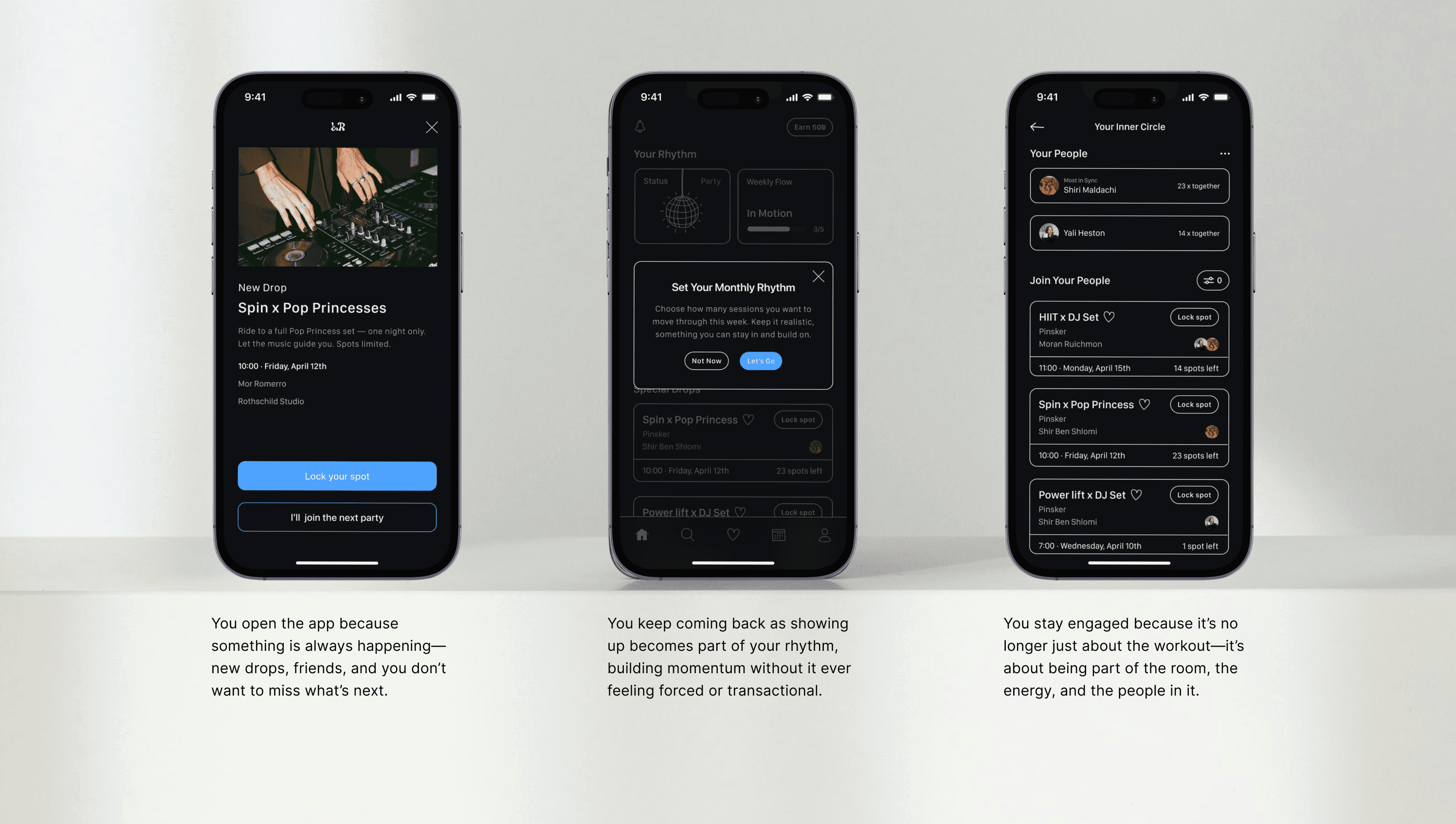
After interviewing current members, I focused on the main issues they experienced.
The redesign reduces decision friction while building motivation through social context and belonging.
Key behavioral principles:
Reduced cognitive load → fewer steps and clearer pathways improve task completion
Social proof → seeing familiar faces makes people more likely to book
Belongingness theory → people engage more consistently when they feel part of a group
By pairing efficiency with social visibility and community touchpoints, the system shifts from a transactional tool to a participation-driven experience.
Sustained engagement comes not only from ease of booking, but from the sense of connection users feel within the system.
The redesign supports long-term behavior through:
reduced effort for repeat actions
visibility into familiar faces and shared routines
opportunities for deeper engagement through events and meetups
This aligns with behavioral research showing that socially reinforced habits are more likely to persist than individually motivated actions.
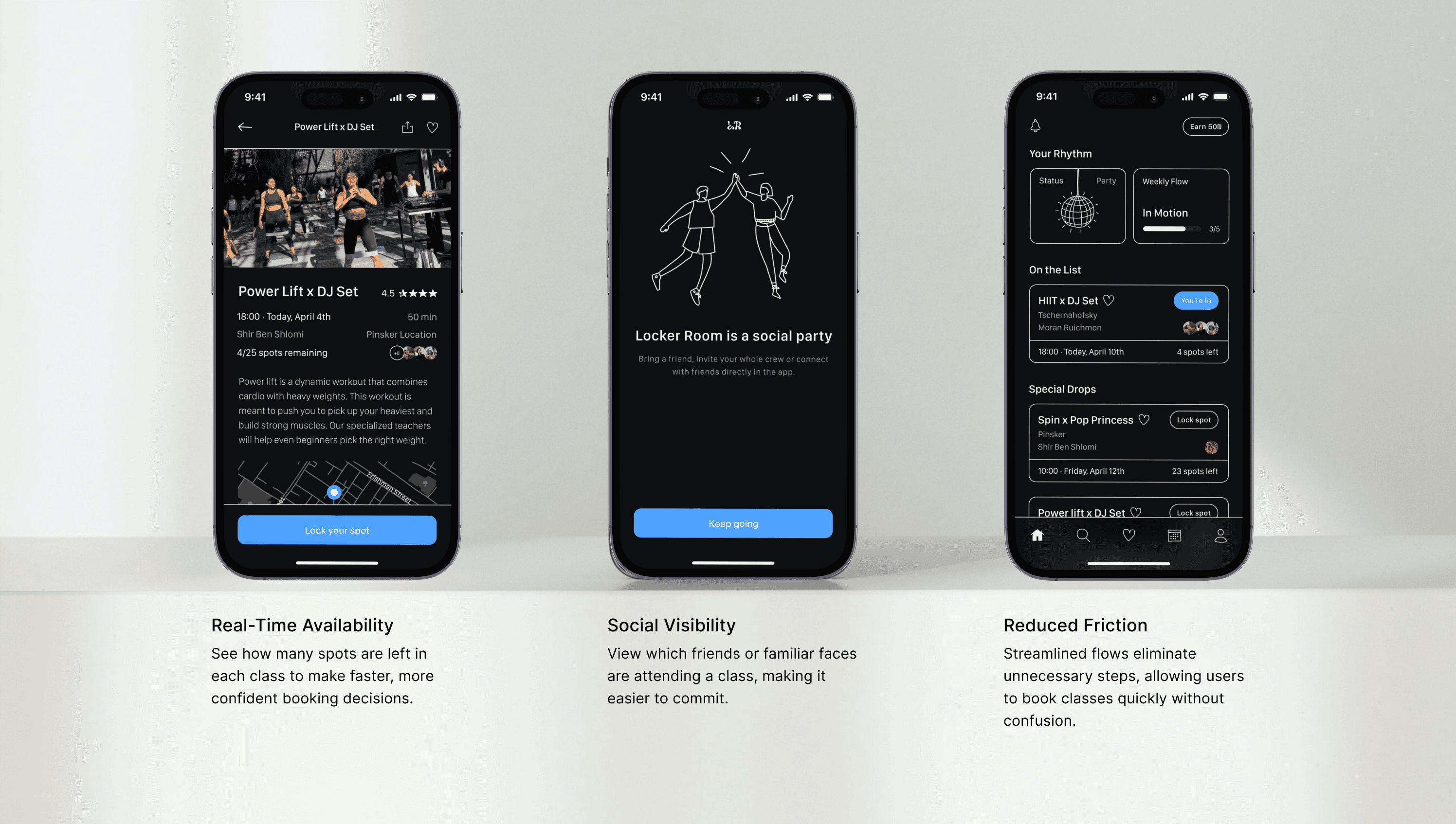
Booking decisions are supported through real-time context and reduced friction, letting users act with speed and confidence. By combining live availability with social visibility, the experience removes uncertainty and streamlines commitment, making participation feel immediate, informed, and effortless.
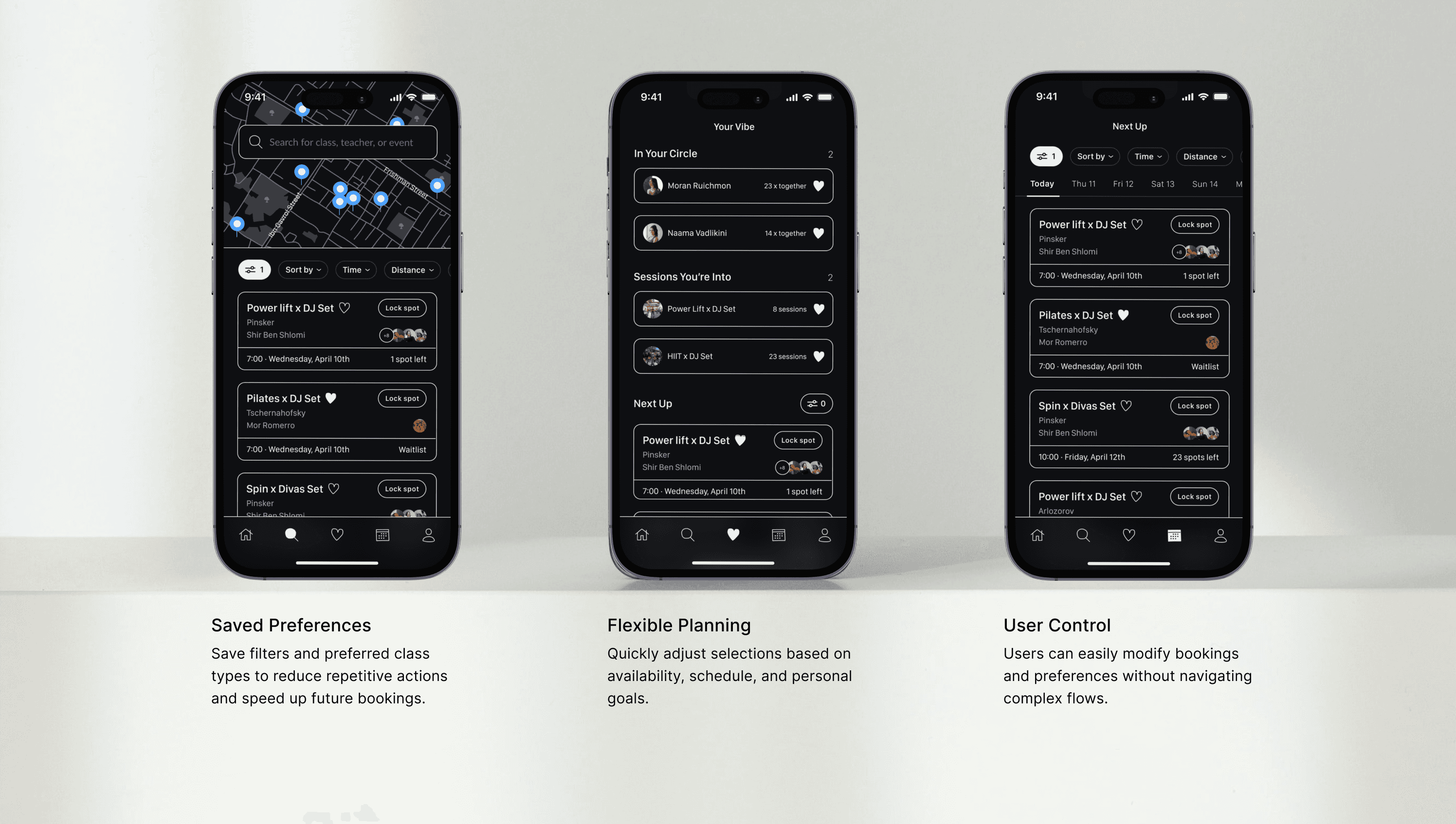
User engagement and repeat booking behavior were strengthened by aligning discovery, planning, and personalization with the user's natural desire for ease, control, and momentum.
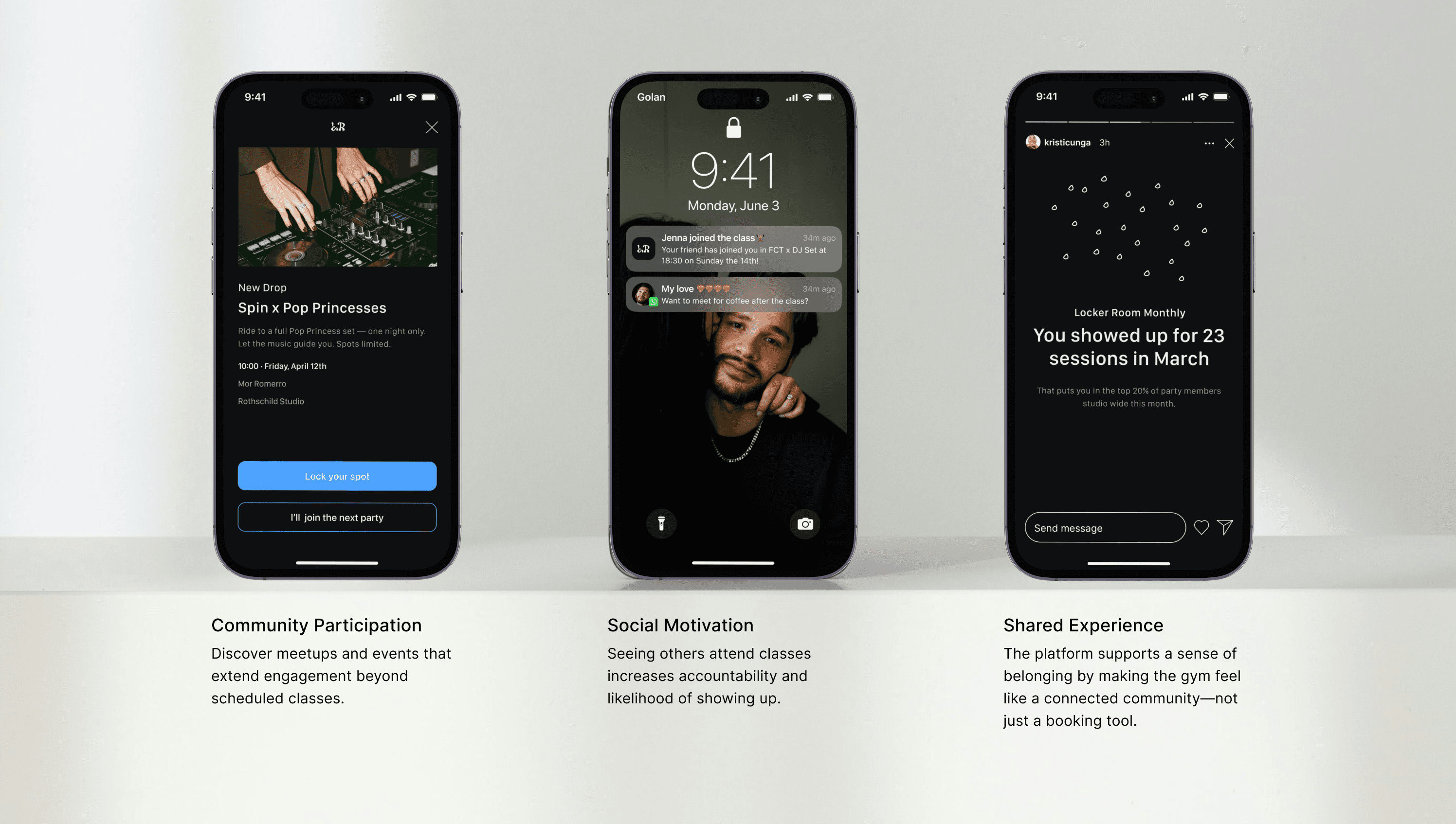
Community-driven behaviors were amplified by embedding social visibility, shared milestones, and real-time participation into the experience, reinforcing a sense of belonging and collective momentum.
This project shows how even utility-driven products, like booking systems, can grow into engagement platforms through thoughtful design.
By reducing friction and adding community-driven features, Locker Room shifts from a functional tool into a system that supports participation, connection, and routine.
It shows how small structural changes can shape not just how people complete a task, but how they engage with the wider experience over time.