UX/UI design
2025
Team of 4, with an art director and developers
Recovery has moved quickly from a niche athletic practice into a mainstream wellness ritual. Saunas, cold plunges, and ice baths that once lived in elite training rooms are now part of everyday routines, and new studios are opening to meet the demand.
WLNS Club is one of them. We were brought on before it opened to design and build its app from scratch. Most recovery tools stop at basic tracking, which rarely helps anyone build a lasting habit. The opportunity was to design an experience that guides people through a session and gives them a reason to come back.
This project explores how a recovery app can feel intuitive, unobtrusive, and repeatable, turning one-off sessions into a routine people actually keep.
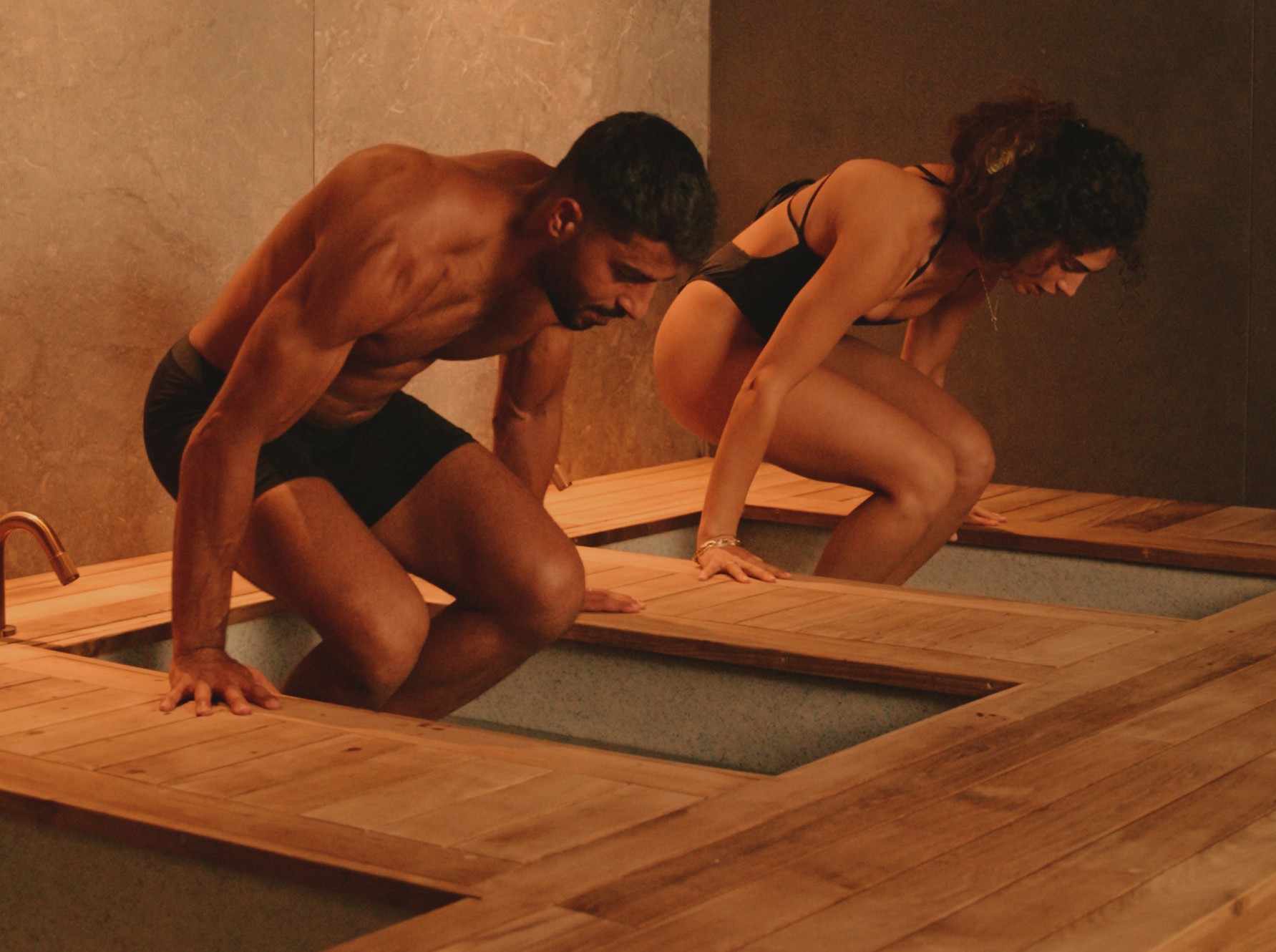
WLNS Club is one of them, and the timing matters: combined sauna and ice-bath experiences are projected to grow around 13.5% a year through 2033. We were brought on before the studio opened to design and build its app from scratch. Most recovery tools stop at basic tracking, which rarely helps anyone build a lasting habit, so the opportunity was to guide people through a session and give them a reason to come back.
As recovery becomes embedded in daily routines, most digital tools fail to support long-term engagement beyond basic tracking.
WLNS Club saw an opportunity to change this, inviting us to design a system that connects sessions, reinforces habits, and drives sustained user retention.
We aimed to turn recovery into a structured, ongoing journey rather than a series of disconnected sessions.
The result is a unified digital experience that connects flows, progress, and behavior—driving long-term user retention for WLNS Club.
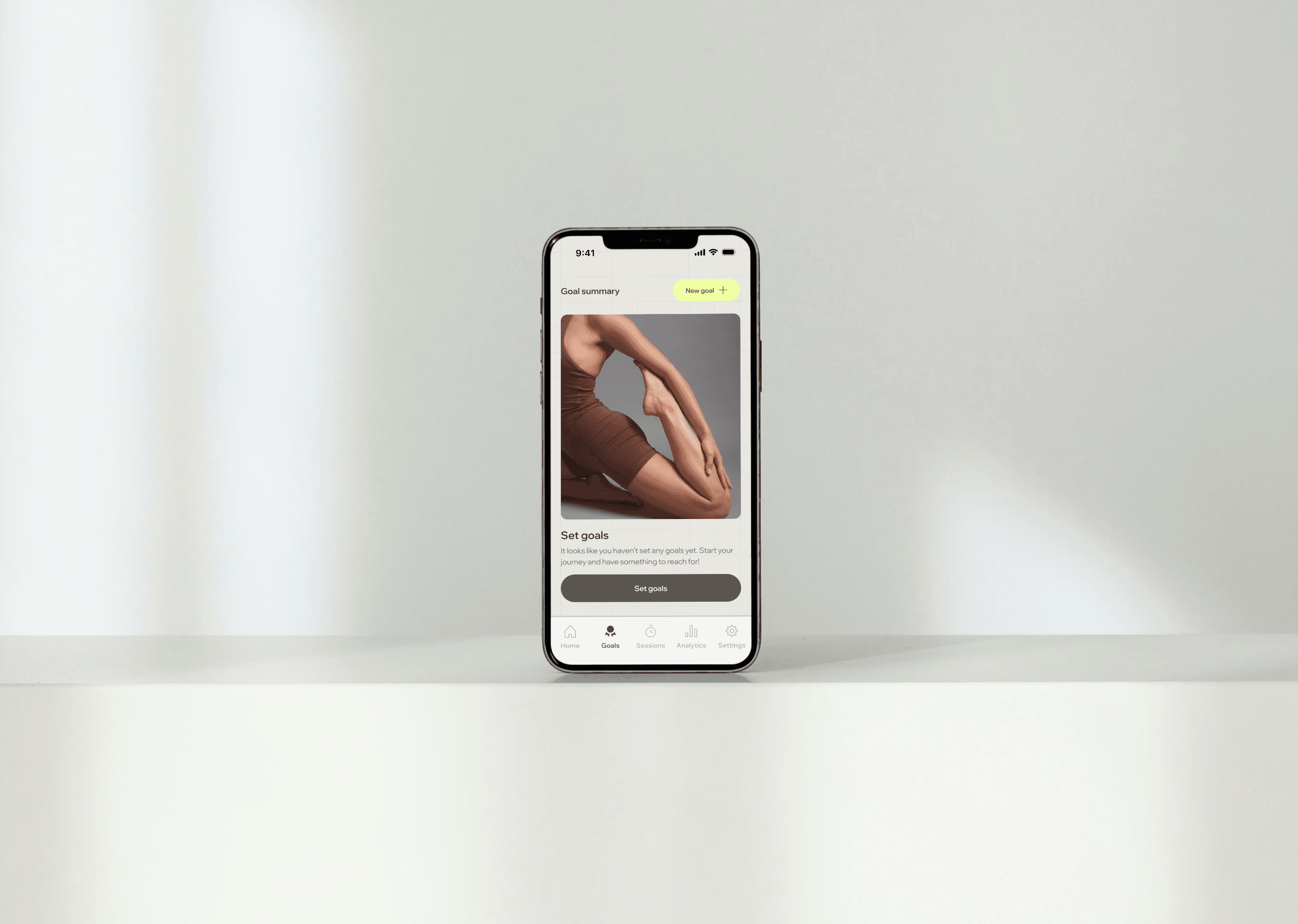
To better understand how users engage with recovery practices, we explored how people approach routines like sauna, ice baths, and circulation therapies. While interest in these methods is growing, our research showed that most users lack clear structure or guidance on how to sequence and sustain them over time.
We asked: How might we guide users through recovery in a way that feels intuitive, unobtrusive, and repeatable?
Research shows that regular sauna use (4–7 times per week) is associated with up to a 77% lower risk of cardiovascular-related death, highlighting the long-term value of consistent recovery rituals.
At the same time, studies on cold-water immersion involving over 3,000 participants found that ice baths can reduce stress levels and improve perceived well-being, though effects depend on consistency and timing.
It provides clear, step-by-step guidance, helping users move confidently through each stage—from body rolling to ice bath to sauna
It enables a hands-free experience, allowing users to stay fully immersed while receiving cues and timing throughout their session
It helps users track progress over time, turning individual sessions into measurable improvement
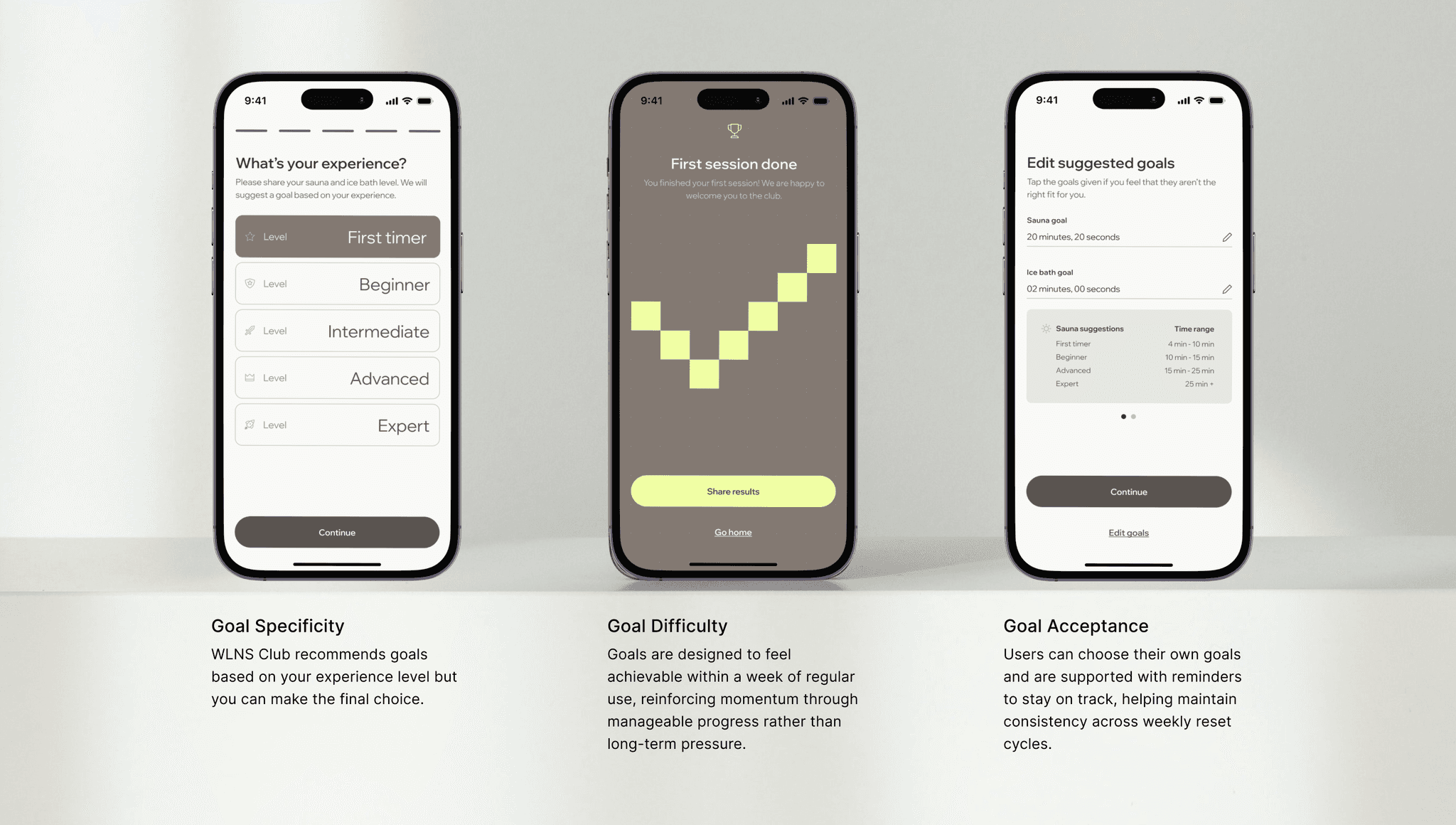
We looked into the behavioral psychology behind goal setting.
WLNS Club is designed to help users turn recovery into a consistent, repeatable practice. Rather than approaching sessions as isolated experiences, the app guides users through structured flows that encourage continuity over time.
Behavioral insights showed that users are more likely to stay engaged when experiences feel achievable, guided, and progressively familiar. By breaking recovery into clear stages (body rolling, circulation, cold exposure, and heat) the process becomes easier to follow and repeat.
Subtle cues and hands-free guidance reduce friction during sessions, allowing users to stay immersed while building confidence in the routine. Over time, this structure reinforces habit formation, helping users return regularly and integrate recovery into their everyday lives.
Early concept validation revealed that focusing solely on guiding users through recovery sessions was not enough to ensure long-term engagement. While the structured flows were effective in-session, they did not fully address how users would return consistently over time.
This led us to revisit the system with a focus on habit formation and retention. We redesigned the experience around reducing friction, increasing clarity, and making recovery easier to repeat as part of a regular routine.
By structuring WLNS Club around progressive, clearly defined flows, users are able to build familiarity with each stage over time, reinforcing consistency through repetition rather than motivation alone.
To support this, we emphasized hands-free interaction and subtle in-session guidance, ensuring users remain immersed without cognitive overload. Together, these design decisions help transform WLNS Club from a one-time experience into a long-term recovery habit.
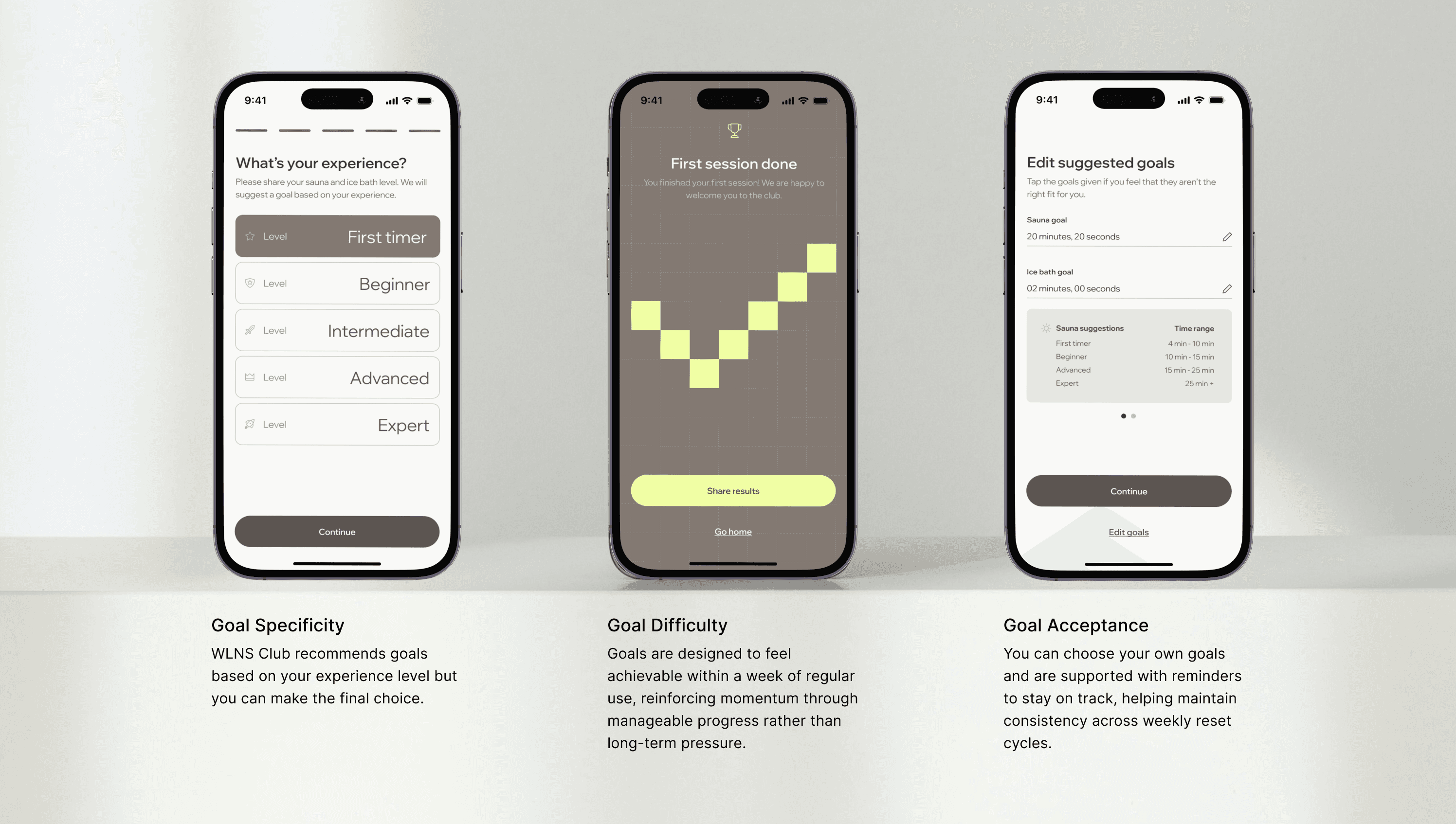
Positive habit formation was reinforced by drawing upon user’s innate curiosity and spirit of competition.
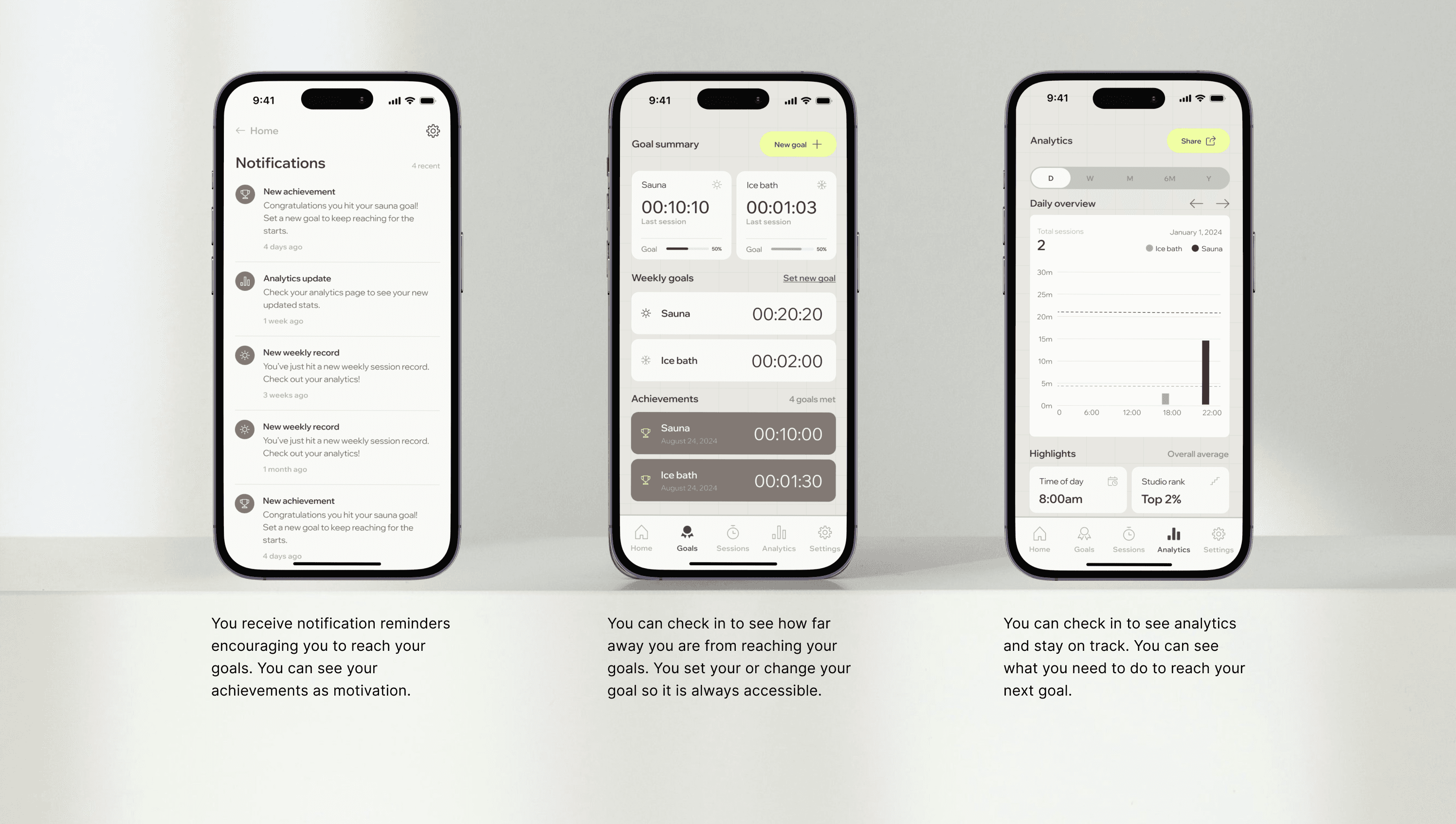
Behavior motivators, like feedback on user’s performance, help increase user engagement.
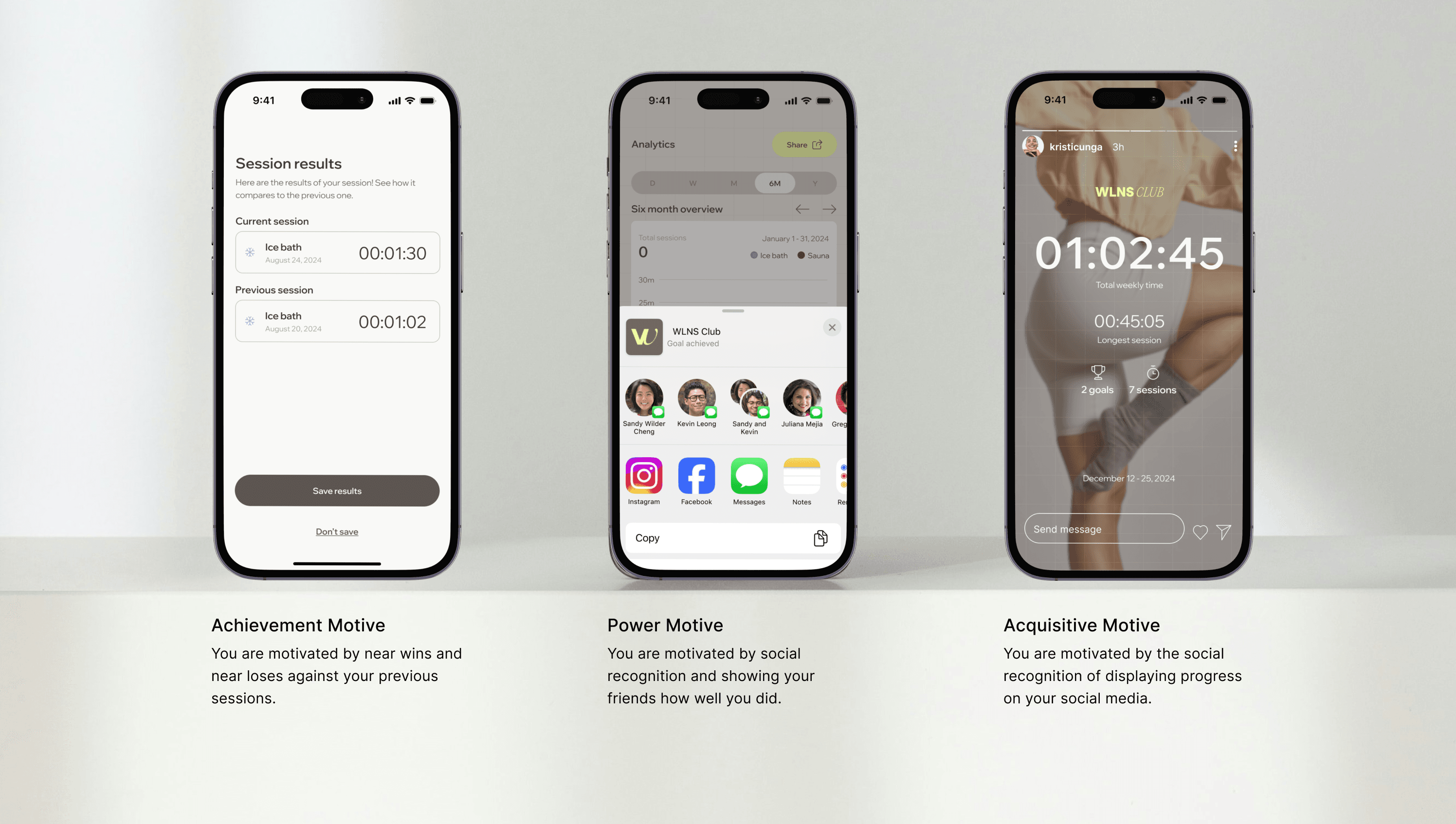
Social motivators based on a sense of achievement, recognition and acquisition were integrated into the designs.
WLNS Club reflects a shift in how wellness experiences are being designed—moving from fragmented tools toward structured, experience-led systems that support behavior over time.
By prioritizing clarity, immersion, and continuity, the project explores how digital products can better align with physical recovery practices and the realities of in-the-moment use.
At its core, WLNS Club demonstrates how intentional system design can shape not just interaction, but the conditions for lasting engagement.